What is body Gua Sha?
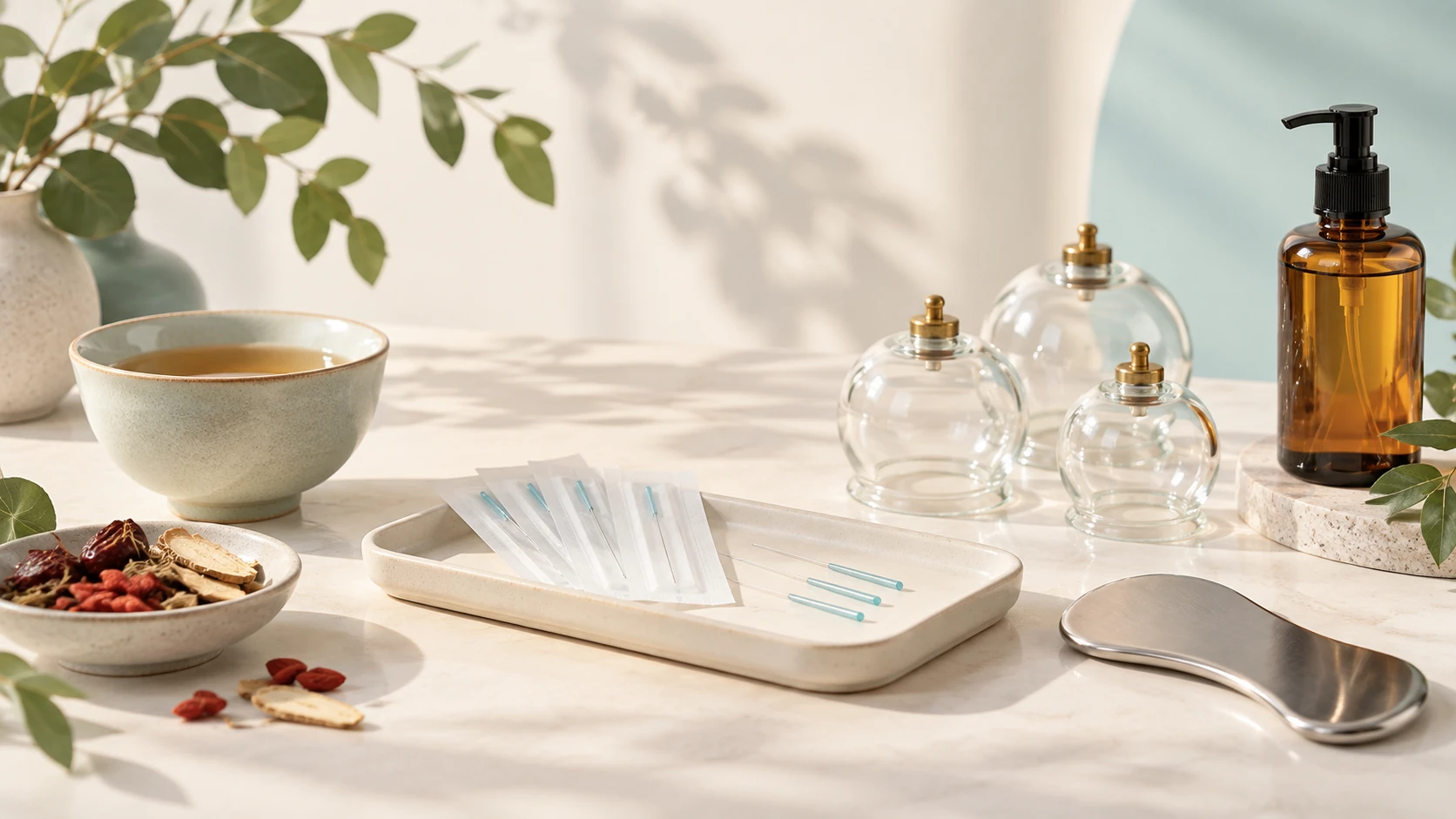
Gua Sha uses a smooth-edged tool over lubricated skin. Traditional body treatment often produces redness or small red or purple marks. The approach and intensity should be explained beforehand.
Discuss pressure, comfort and the possibility of marks before treatment. Marks do not measure toxins, and deeper marks are not a reason to increase the intensity.
What is IASTM?
Instrument-assisted soft-tissue mobilisation uses a tool to apply pressure and glide over areas of soft tissue. It is used in some musculoskeletal and rehabilitation settings.
The approach is chosen around the area of discomfort, movement and your feedback. It may be combined with activity advice or other suitable care when appropriate.
Do they have to hurt or leave marks?
No treatment should be a test of how much discomfort you can tolerate. Gua Sha often leaves marks, while IASTM does not need to create bruising. Stronger pressure is not proof of better care.
Tell Nyx if you do not want visible marks or if a sensation is uncomfortable. Skin condition, bleeding risk and a recent injury may make strong tool work inappropriate.
Which should I choose?
Start with your concern, skin condition and preferences when choosing an approach. At ALLBODY HEALTH, Gua Sha is $40 for 15–20 minutes and IASTM is $40 for 15–20 minutes, following a suitability check.
Neither is presented as a way to break scar tissue, detox the body or permanently reshape fascia in one session. If you are unsure how to arrange a visit, ask through the free consultation rather than guessing which tool you need.
What to mention before treatment
Tell Nyx about blood-thinning medicines, bleeding disorders, fragile skin, reduced sensation, skin disease, pregnancy or recent surgery. Broken or infected skin should not be treated directly. Seek advice for an unexpected or worsening skin reaction instead of assuming it is part of recovery.