
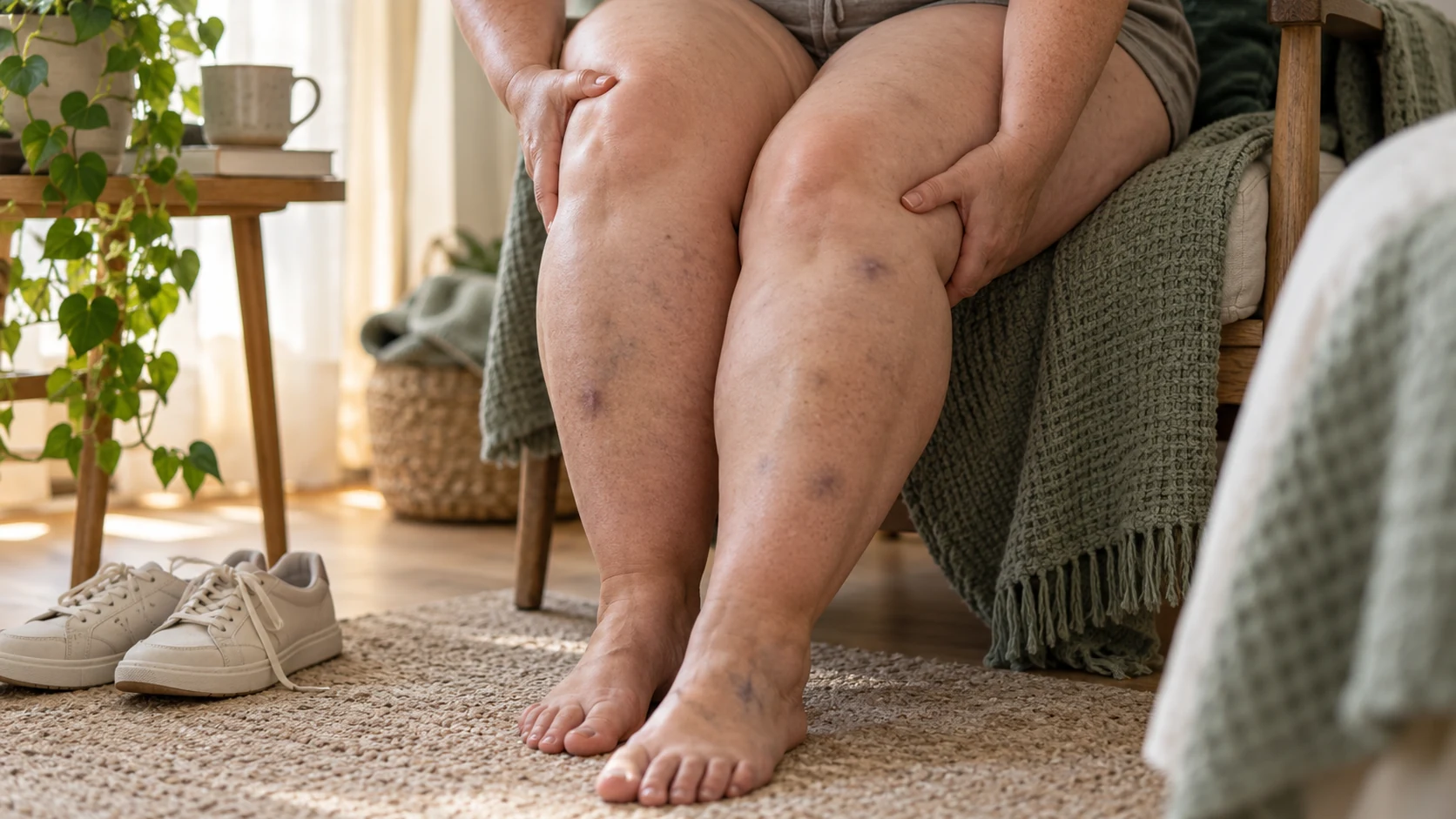
What pattern can suggest lipoedema?
Lipoedema commonly causes symmetrical enlargement of the hips, thighs or legs and sometimes the arms. The feet are often spared, while the affected tissue may feel tender, heavy or unusually easy to bruise.
It often appears or changes around hormonal stages such as puberty, pregnancy or menopause. These features are clues, not a diagnosis, and not everyone with large or painful legs has lipoedema.
What can acupuncture help you with?
If your legs hurt when touched, feel increasingly heavy by the end of the day, ache at night or leave you too uncomfortable to walk and exercise regularly, acupuncture can focus on those symptoms. The aim is to calm pain sensitivity, release surrounding muscle tension, support sleep and make daily movement feel more manageable.
Treatment does not mean placing many needles into tender tissue. Nyx adjusts the position and strength of treatment to your sensitivity and may use carefully selected points away from the most painful or easily bruised areas. Chinese medicine also considers sleep, stress, digestion, temperature and energy because these can affect how strongly pain and heaviness are experienced.
Progress is measured in practical ways: whether touch feels less uncomfortable, whether you can stand or walk for longer, whether your legs settle more easily at night and whether it becomes easier to keep up movement or wear prescribed compression. If these changes are not happening, the plan is adjusted rather than continuing automatically.
How are Chinese and Western care combined safely?
Medical assessment comes first when swelling is new, changing or unexplained. Once important causes have been considered, acupuncture can sit alongside professionally fitted compression, appropriate activity, skin care and specialist support. Nyx reviews circulation, skin condition, bruising and sensitivity before choosing where and how gently to treat.
Needling and massage are avoided over infected skin, marked bruising or acutely hot and swollen areas. Visits can be closer together while symptoms are troublesome, then spaced out when comfort and activity are steadier. This makes acupuncture a flexible form of ongoing support that can change with your symptoms, activity and treatment goals.
Is it the same as obesity or lymphoedema?
No. Lipoedema can occur at any body size and the affected areas may respond differently from ordinary body fat. Lymphoedema involves fluid and lymphatic swelling and may include the feet; the two conditions can also occur together.
Venous problems, medication effects and heart, kidney or other medical conditions can also cause leg swelling. Self-diagnosis from photographs can miss an important cause.
What does long-term management usually include?
Long-term care aims to make the legs more comfortable, protect mobility and help you stay active. Depending on the individual, this may include suitable movement, skin care, professionally fitted compression and support from clinicians experienced in lipoedema or lymphoedema. Some people are referred for specialist procedures after careful assessment.
A useful plan also considers pain, sleep, muscle tension, confidence with movement and the emotional load of living with a condition that is often misunderstood. Progress is measured through comfort and daily function, not only body size.
When is leg swelling urgent?
Sudden swelling in one leg, new redness, heat or severe pain needs urgent medical assessment. Call 111 for swelling with chest pain, shortness of breath, coughing blood, fainting or other emergency symptoms. Fever with red, painful skin may indicate infection and also needs prompt care.